
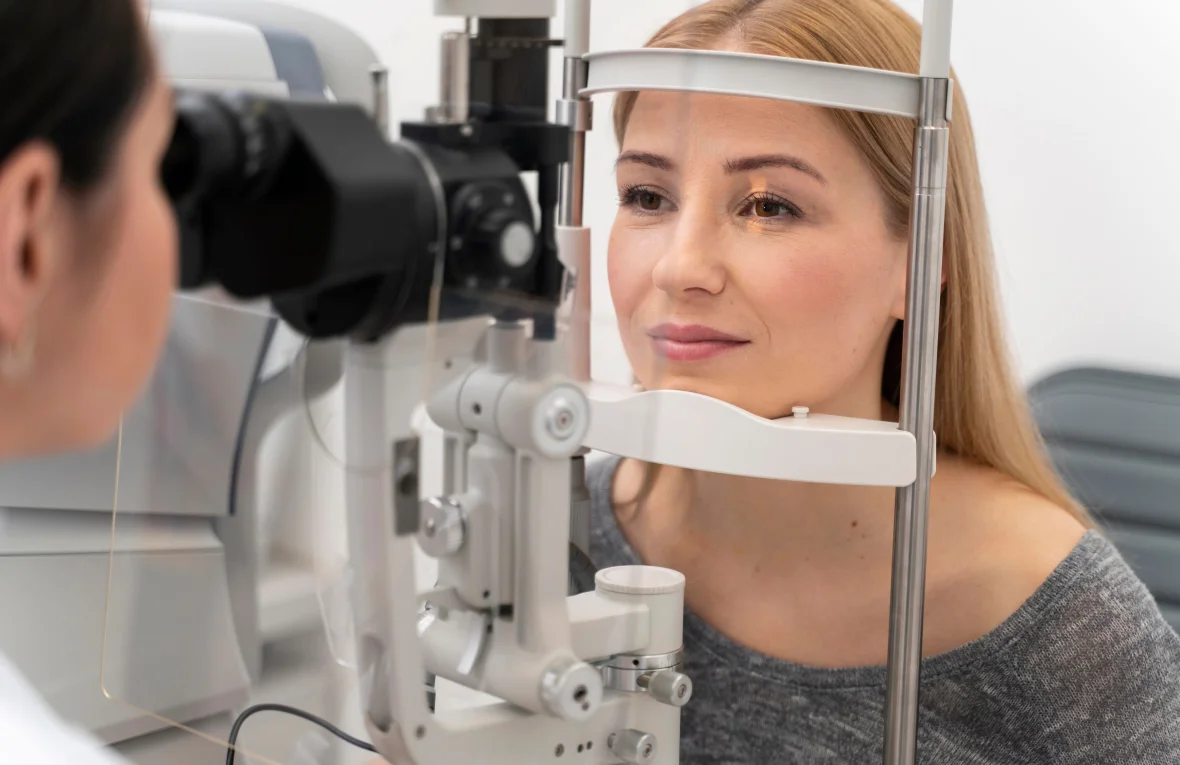
Understanding the Cornea and Why Its Health Is Critical
If the eye is a camera, the cornea is its lens cover — but unlike a passive cover, it actively contributes to vision. The cornea is the clear, dome-shaped tissue at the very front of the eye, responsible for approximately two-thirds of the eye’s total focusing power. Its transparency and precise curvature are essential to sharp, undistorted vision. Any condition that clouds, scars, distorts, or weakens the cornea can have a significant impact on the quality of vision, and in some cases, the health of the eye as a whole.
Corneal conditions vary widely in cause, severity, and treatment. Some develop due to infection, others are inherited or degenerative, and some are caused by environmental factors, contact lens overuse, or prior eye surgery. Whatever the origin, timely evaluation and appropriate treatment are key to preserving vision and preventing permanent damage.
Common Corneal Conditions and Their Symptoms
Keratoconus is one of the more commonly encountered corneal conditions in clinical practice. It involves progressive thinning and forward bulging of the cornea, causing increasing myopia and irregular astigmatism that cannot be fully corrected with glasses. Patients typically notice frequent changes in their glasses prescription, blurred or distorted vision, and increased glare or halos around lights. It often begins in the teens or early twenties and can progress over time. Early detection is important because treatment options at the mild to moderate stage — including collagen cross-linking — can halt progression effectively.
Corneal infections (keratitis) can be bacterial, viral, fungal, or parasitic in origin. Contact lens wearers are at particular risk of microbial keratitis, which can progress rapidly and cause corneal ulcers if not treated aggressively. Viral keratitis, particularly from herpes simplex virus, is a recurring condition that requires long-term management. Fungal keratitis, more common in agricultural settings and after eye injuries involving plant matter, can be difficult to treat and slow to respond. Prompt diagnosis and appropriate antimicrobial treatment are essential to prevent scarring and vision loss.
Fuchs’ endothelial dystrophy is a hereditary condition affecting the inner layer of the cornea, leading to swelling, cloudiness, and glare. Corneal scars from old injuries, infections, or chemical burns can permanently reduce vision if central. Pterygium — a fleshy growth extending from the conjunctiva onto the cornea — can cause irritation, cosmetic concerns, and in advanced cases, vision distortion. Dry eye disease, while often perceived as a minor nuisance, can in its chronic or severe form cause significant corneal surface damage.
Corneal Care at Neyera Magic Eye Care, Khandeshwar
At Neyera Magic Eye Care, we understand that corneal conditions can be deeply unsettling — particularly those that cause progressive vision change or discomfort. Our approach is to provide thorough evaluation using appropriate diagnostic tools, honest guidance about your condition and its trajectory, and treatment that is proportionate to the severity and your individual needs. We take the time to explain what is happening and what the options are, without rushing to intervention when it is not yet warranted.
Located in Khandeshwar, Navi Mumbai, we serve patients from Panvel, Kharghar, Taloja, Belapur, Alibagh, Karanjade, and surrounding areas. Whether you are dealing with an acute corneal infection, a longstanding condition like keratoconus, or simply want to understand why your glasses prescription keeps changing, we are here to help. Call us at 9559550957 or email info@neyeramagic.com to book your consultation.
Frequently Asked Questions
How often should I have an eye exam?
It’s recommended that adults have a comprehensive eye exam every 1-2 years, even if your vision seems fine. For children, their first eye exam should be at 6 months, followed by another at 3 years old, and then annually during school years. If you wear glasses or contact lenses or have a medical condition like diabetes, you may need more frequent exams.
What are the signs that I need glasses?
If you’re experiencing frequent headaches, eye strain, blurry vision (either up close or at a distance), difficulty seeing at night, or squinting to focus, these could be signs that you need glasses. A comprehensive eye exam will determine if corrective lenses are necessary.
What are the treatment Options for Corneal Disease?
Treatment depends entirely on the diagnosis, its severity, and the specific characteristics of your cornea. Corneal cross-linking (CXL), used for progressive keratoconus, involves instilling riboflavin eye drops followed by controlled ultraviolet light exposure to strengthen the corneal collagen and slow or stop progression. It does not restore lost vision but is highly effective at halting further deterioration.
Corneal transplantation — or keratoplasty — is considered when corneal disease has caused significant vision loss that cannot be addressed by other means. Modern techniques like DSAEK and DMEK allow selective replacement of only the diseased layer of the cornea rather than the full thickness, resulting in faster visual recovery and better outcomes. Medical treatment for corneal infections involves intensive topical antibiotics, antivirals, or antifungals depending on the causative organism. Pterygium removal, when indicated, is a straightforward surgical procedure with good outcomes.