
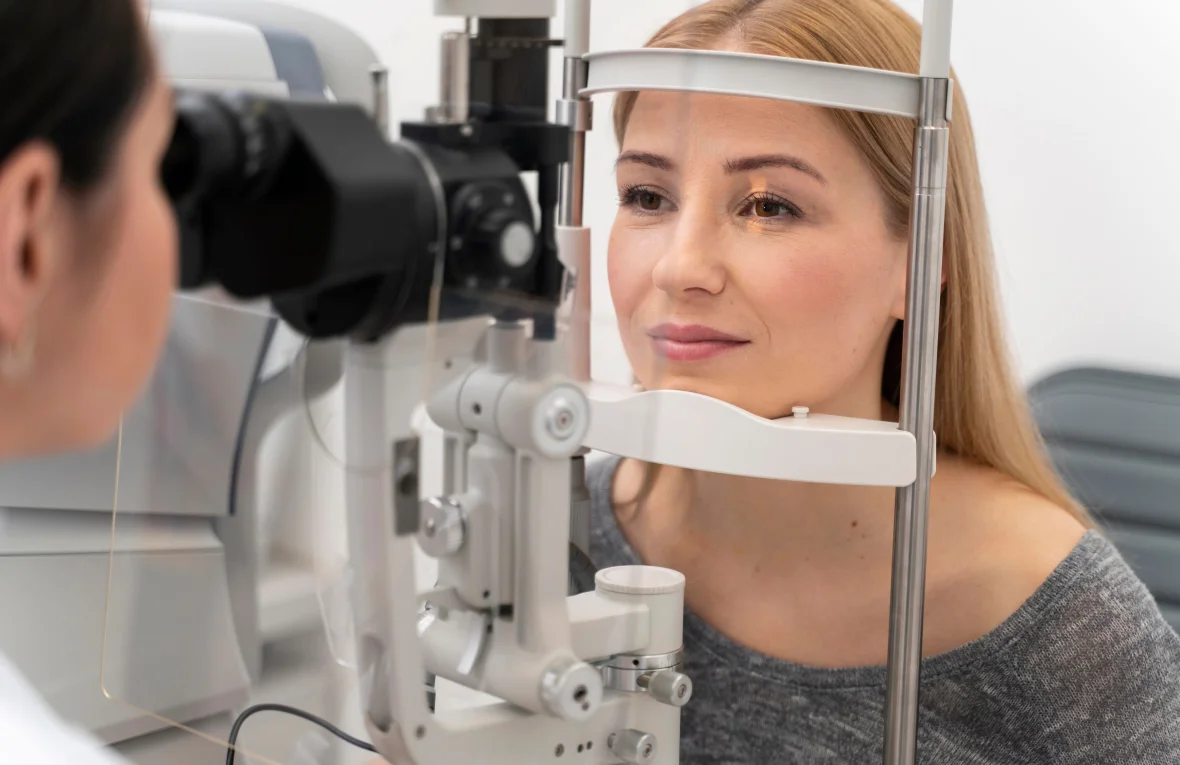
What Is Oculoplasty — And Why Does It Require a Specialist?
Oculoplasty is the subspecialty within ophthalmology that deals with the eyelids, the tear drainage system (lacrimal apparatus), the orbit (the bony socket surrounding the eye), and associated structures. It sits at the intersection of eye care, reconstructive surgery, and aesthetic medicine — demanding a surgeon who understands both the functional importance of the eye and the delicate aesthetics of the periorbital region.
The conditions treated under oculoplasty range from functional problems — like drooping eyelids that obstruct vision, or blocked tear ducts causing chronic watering — to tumours of the orbit or eyelid, and cosmetic concerns around the eyes. Because these conditions involve structures so close to and intertwined with the eyeball itself, management by a trained oculoplasty specialist is far safer and more effective than general surgical intervention.
Conditions Treated by Our Oculoplasty Specialist
Ptosis, or drooping of the upper eyelid, is among the most common oculoplasty referrals. It may be congenital (present from birth) or acquired, and in severe cases it can partially obstruct the pupil, effectively reducing vision. In children, untreated congenital ptosis can lead to amblyopia (lazy eye). Surgical correction raises the eyelid to its proper position, restoring both function and appearance. Dr. Prithesh Shetty has performed over 500 ptosis surgeries with consistently excellent results.
Epiphora — excessive watering of the eyes — is often caused by a blocked tear duct rather than overproduction of tears. The most effective treatment is dacryocystorhinostomy (DCR), a procedure that creates a new drainage channel for tears into the nasal cavity. Dr. Shetty has performed over 2,000 DCR surgeries, placing him among the most experienced lacrimal surgeons in the Mumbai region. Entropion (inward-turning eyelid) and ectropion (outward-turning eyelid) are other common conditions causing irritation, redness, and corneal exposure that require surgical correction.
Orbital tumours, thyroid eye disease, post-traumatic orbital fractures, and conditions requiring evisceration or enucleation (removal of the eye) all fall within the domain of orbital surgery. Ocular oncology — the treatment of eye tumours including conjunctival melanoma, basal cell carcinoma of the eyelid, and orbital malignancies — demands a surgeon with both oncological understanding and reconstructive capability. Dr. Shetty’s fellowship at Aravind Eye Hospital, one of the world’s leading eye institutions, included training in precisely these areas.
Ocular Aesthetic Treatments — Botox and Fillers
Beyond functional surgery, Dr. Shetty also offers ocular aesthetic enhancement using botox and dermal fillers. Periorbital botox is used for dynamic wrinkles around the eyes, while fillers can address volume loss in the under-eye or temporal region that creates a tired, sunken appearance. Because these treatments are performed by an oculoplasty surgeon rather than a general aesthetic practitioner, the risk management around the eye area is significantly more informed — a meaningful difference when working so close to a critical structure.
Dr. Prithesh Shetty — Mumbai's Super-Specialist Oculoplasty Surgeon
Dr. Prithesh Shetty holds an MS and DNB in Ophthalmology and completed a prestigious fellowship in oculoplasty at Aravind Eye Hospital, Madurai. He is one of only a small number of true oculoplasty super-specialists practising in Mumbai. Currently heading the Department of Oculoplasty at KB Haji Bachooali Hospital, Parel, Dr. Shetty extends his services to multiple leading institutions across the city, including Fortis Hospital, Mulund, and several renowned eye care centres.
He is also deeply committed to academic medicine, actively conducting lectures, workshops, and postgraduate teaching, and mentoring certified oculoplasty fellows. At Neyera Magic Eye Care in Khandeshwar, patients from Navi Mumbai, Panvel, Kharghar, Belapur, Alibagh, and surrounding areas can access his expertise without travelling across the city. Call 9559550957 or email info@neyeramagic.com to book a consultation.
Frequently Asked Questions
How often should I have an eye exam?
It’s recommended that adults have a comprehensive eye exam every 1-2 years, even if your vision seems fine. For children, their first eye exam should be at 6 months, followed by another at 3 years old, and then annually during school years. If you wear glasses or contact lenses or have a medical condition like diabetes, you may need more frequent exams.
What are the signs that I need glasses?
If you’re experiencing frequent headaches, eye strain, blurry vision (either up close or at a distance), difficulty seeing at night, or squinting to focus, these could be signs that you need glasses. A comprehensive eye exam will determine if corrective lenses are necessary.